Fine hair has a way of looking gorgeous one hour and lifeless the next, and the difference almost always comes down to the cut. The right haircut works with your strand density instead of against it, building in lift, movement, and shape so you’re not relying on dry shampoo and a round brush every single morning. If you’ve been stuck styling the same flat lengths for years, it’s time to see what a real upgrade looks like.
This roundup pulls together 35 cuts that stylists actually recommend for fine strands, from blunt bobs to soft shags to pixies with lifted crowns. Each one uses a different trick, whether that’s a blunt perimeter, strategic layering, or a razor-cut edge, to make hair read thicker and fuller. Consider this your reference list before your next salon appointment.
1. Blunt Collarbone Lob
A blunt cut at collarbone length keeps every strand at the same weight, which is exactly what fine hair needs to look dense instead of see-through. There’s no internal layering pulling bulk out of the mid-lengths, so the ends stay thick and defined. In practice, this cut photographs beautifully straight or with a loose bend from a one-inch iron.
It works especially well on straight, fine hair that tends to separate into stringy pieces when layered too aggressively. Oval and heart face shapes suit this length nicely since it hits right where the jaw narrows. Expect a trim every eight to ten weeks to keep the line crisp.
2. Chin-Length Blunt Bob
Shortening a blunt bob to chin length concentrates the same amount of hair into a smaller perimeter, which visually thickens the whole shape. There’s a reason stylists call this a classic fix for fine hair, the density per inch simply goes up. No graduation, no thinning shears, just one clean line.
This cut suits round and oval faces particularly well because it grazes the jaw and draws attention to the cheekbones. Fine, straight hair holds this shape with minimal effort, though a light flat iron pass keeps flyaways controlled. Plan on reshaping every six to eight weeks.
3. Textured Long Bob With Soft Waves
A long bob with razor-textured ends and loose waves creates the appearance of thickness through broken-up movement rather than sheer length. Each wave casts a small shadow, and that shadow is what tricks the eye into seeing more density. Straight fine hair will not hold this shape without a wand or wave spray.
Balayage placed through the mid-lengths adds another layer of dimension, since lighter pieces catch light differently than the root. Heart and oval faces wear this especially well. Reapply texture spray at the roots before waving for extra hold that lasts through the day.
4. Bixie Cut With Lifted Crown Layers
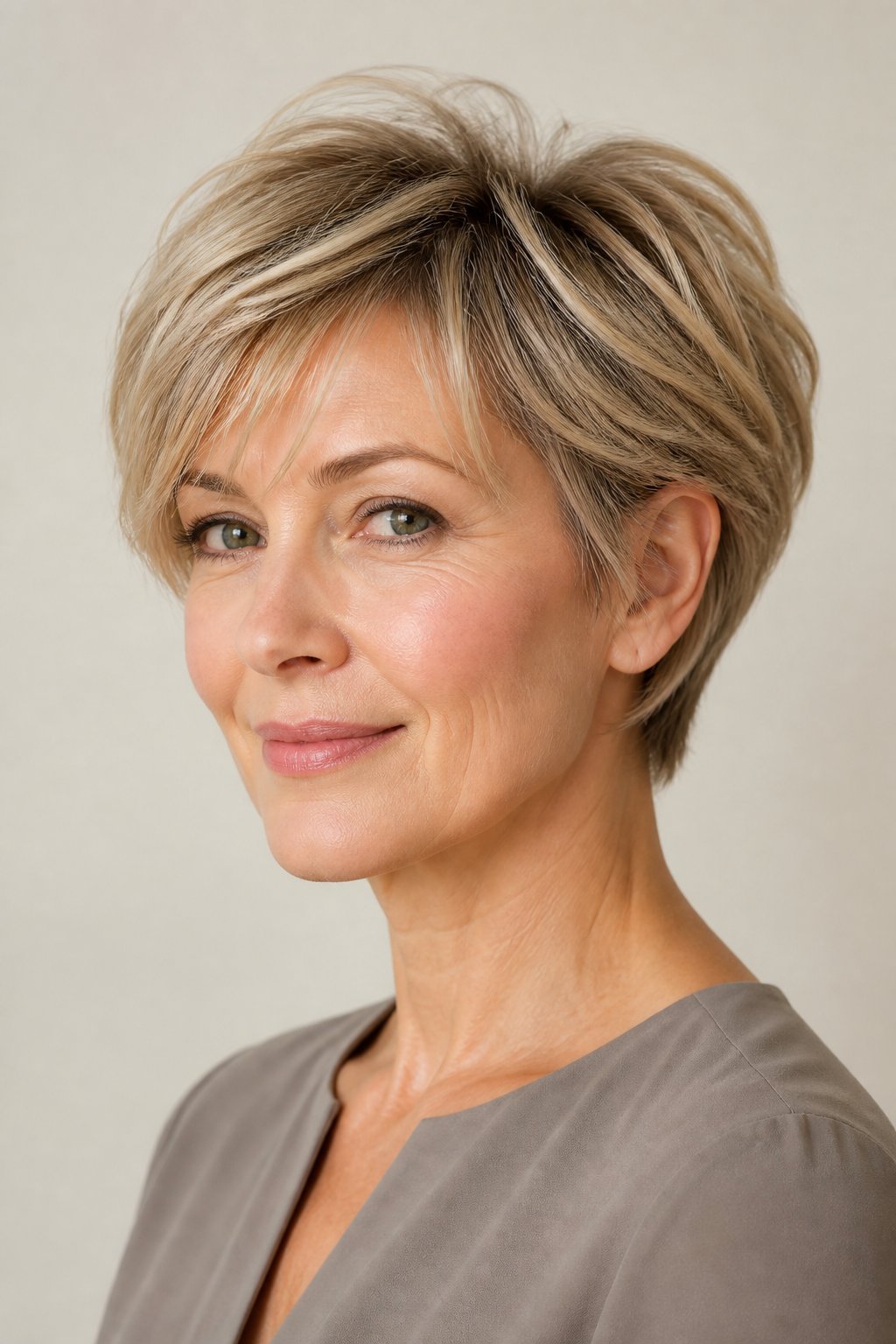
Part pixie, part bob, the bixie stacks short layers right at the crown so hair pushes upward instead of collapsing. That lift is the entire point for fine strands that usually go flat by midday. The sides and nape stay close-cropped, keeping the silhouette from bulking out anywhere it shouldn’t.
Round and oval faces handle this cut best since the height at the crown elongates the face. It needs reshaping every four to five weeks or the crown layers lose their lift and the whole style droops. A light volumizing mousse applied to damp roots before blow-drying keeps the shape going all day.
5. Long Pixie With Piecey Top Layers
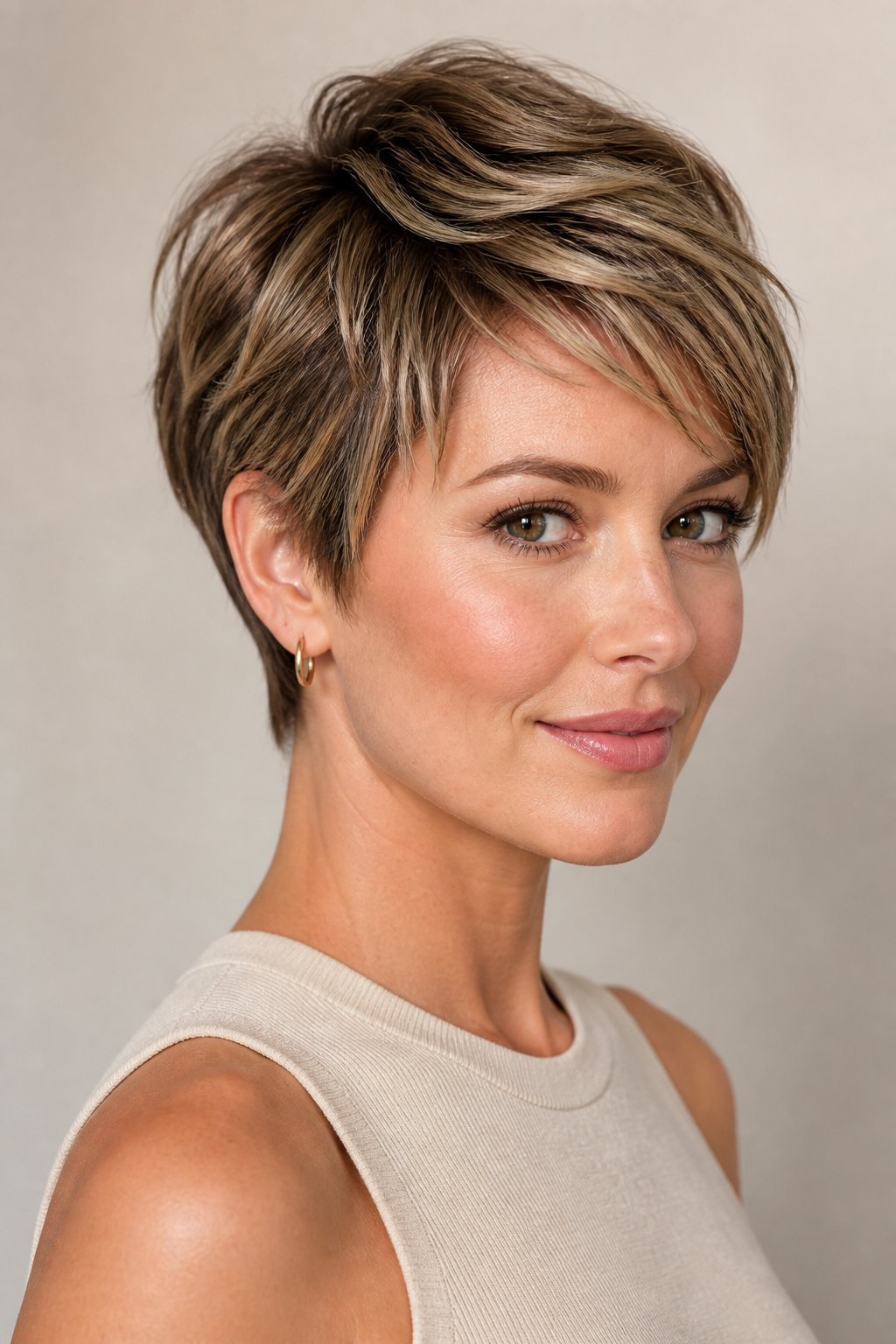
A long pixie leaves more length on top than a classic crop, giving fine hair room to be textured into separated, piecey layers. Those layers are razor-cut so they sit apart rather than clumping into one flat mass. It reads as fuller because the eye picks up movement instead of one solid sheet of hair.
This length flatters most face shapes, though narrow faces benefit from keeping some width at the sides. Styling takes minutes: a dime-size amount of texturizing paste worked through damp hair, then air-dry or diffuse. Trims every four to six weeks keep it sharp.
6. French Bob With Wispy Fringe
The French bob sits just below the chin with minimal layering, and pairing it with a wispy, broken-up fringe keeps the whole look from feeling heavy on fine hair. Blunt bangs would drag the eye down and look thin by comparison, but wispy pieces move and separate naturally.
Oval and heart-shaped faces suit this cut especially well, since the fringe softens the forehead without covering it completely. Fine, straight hair holds this shape cleanly with just a round brush blowout. Bangs need trimming every three to four weeks to stay wispy instead of growing into a heavy curtain.
7. Graduated Bob With Stacked Nape
Graduation at the back builds stacked layers that push hair outward and forward, creating volume right where fine hair typically falls flattest against the head. No teasing or heavy product required, the cutting technique does the work. It’s one of the most reliable structural fixes for fine, straight hair.
This cut suits oval and round face shapes well thanks to the forward-pushing shape at the jaw. Reshaping every five to six weeks is non-negotiable here, since grown-out stacking just looks like a shapeless bob. A root-lifting spray before blow-drying amplifies the built-in volume even more.
8. Asymmetrical Jaw-Length Bob
An asymmetrical bob keeps one side longer than the other, which breaks up the predictable straight line of a classic bob and adds visual interest that reads as more texture. On fine hair, that asymmetry distracts from thinness because the eye follows the angle instead of scanning for volume.
Oval and heart face shapes wear this well, and a deep side part enhances the effect further. Straight fine hair holds the angle cleanly with a flat iron finish. Expect trims every six weeks to maintain the sharp diagonal line before it softens out.
9. Shaggy Bob With Layered Bangs
Short interior layers throughout a bob-length cut create built-in texture that keeps fine hair from lying in one flat sheet. Adding layered bangs extends that texture right into the face, softening the forehead while keeping movement consistent from root to end. It’s a low-maintenance way to fake density.
This cut works on most face shapes since the bangs can be tailored to width and length. Fine hair styles quickly with a diffuser and a texturizing spray. Bang trims every three to four weeks keep the shag looking intentional rather than grown-out.
10. Chin-Length Shag With Wispy Bangs
Interior layers starting near the crown build lift through the mid-shaft while the ends stay thin and piecey, which is the classic shag formula for fine hair. Wispy, broken bangs finish the look without adding weight to a smaller forehead. Waves from a curling iron amplify the texture significantly.
Oval and heart-shaped faces wear this particularly well. On straight, fine hair, this style needs a wave to look full, otherwise it separates too much and reads flat. Ash or cool-toned highlights through the mid-lengths add extra dimension and catch light differently at each layer.
11. Collarbone Shag With Curtain Fringe
Shortest layers sitting at cheekbone level, not the crown, keep this shag from ballooning out on fine hair. Razor-cut ends add movement without stripping away too much weight, and warm highlights through the mid-lengths create the illusion of depth. Curtain fringe frames the face without covering the forehead entirely.
Oval and heart faces suit this shape best. Round faces should be cautious, since the volume at the sides and fringe both add width. This cut needs reshaping every six weeks or it loses its defined layers and turns into a shapeless bob.
12. Butterfly Cut With Cheekbone Layers
The butterfly cut uses face-framing layers that start around the cheekbones and fan outward, mimicking the shape of wings when hair is curled or waved. On fine strands, this placement adds volume exactly where it’s most visible, right around the face. It photographs beautifully with a loose curl pattern.
Heart and oval faces benefit most from the framing effect. Straight, fine hair needs a curling wand to really show off the layer separation this cut is known for. Highlights around the face amplify the dimension even more.
13. Soft Wolf Cut With Bottleneck Bangs
The wolf cut combines shag-style layering with a slightly edgier, choppier finish, and bottleneck bangs (fuller at the brow, tapering out at the ends) keep the fringe from looking heavy. On fine hair, this combination builds noticeable texture without a lot of daily styling effort.
Round and oval faces suit this cut well thanks to the layered width through the crown. A texturizing spray scrunched through damp hair, then air-dried, brings out the piecey quality this cut relies on. Reshaping every six weeks keeps the layers distinct.
14. Angled Lob With Blunt Ends
An angled lob is longer in the front and shorter in the back, and keeping the ends blunt rather than layered preserves maximum density along the perimeter. Fine hair benefits from this because there’s no internal thinning removing bulk from the mid-lengths.
Oval and heart-shaped faces wear the front-to-back angle nicely, since the longer pieces frame the jaw. Straight styling works well here, though a soft bend at the ends softens the geometric line. Trims every eight weeks keep the angle sharp.
15. Italian Bob With A Deep Side Part
The Italian bob sits at the jaw with a rounded, face-hugging shape, and a deep side part pushes noticeable volume to one side of the crown. That asymmetry is doing real work for fine hair, since even distribution usually looks flatter than a lopsided root lift.
Oval and heart faces suit this length and part combination especially well. A blowout with a round brush, directing hair away from the deep part, builds the volume this cut depends on. Reshaping every six to seven weeks keeps the rounded shape intact.
16. Micro Bob With Textured Ends
A micro bob sits above the jaw, often near the ear, and that shortness alone concentrates hair density into a smaller space. Textured, razor-cut ends keep it from looking blunt and heavy, adding just enough movement to feel modern rather than severe.
Oval and heart faces handle this length best since it draws attention up toward the cheekbones. Fine hair styles quickly here with minimal product, a dime of texturizing cream is usually enough. Trims every four to five weeks are necessary to maintain the shape.
17. Razor Pixie With A Layered Crown
Razor cutting throughout a pixie removes bulk unevenly, creating soft, feathered layers that build lift specifically at the crown. This technique suits fine hair because it avoids the blunt, chunky look that can make short cuts feel heavy instead of airy.
Round and oval face shapes wear this especially well. Styling takes very little time, just a pea-size amount of pomade worked through damp hair with fingers. Expect to visit the salon every four weeks to keep the crown layers doing their job.
18. Textured Pixie With Choppy Layers
Choppy, uneven layers throughout a pixie create intentional texture that reads as thicker hair, since no two pieces lie in exactly the same direction. This cut relies on the layering technique rather than length to build volume, which works well for finer densities.
Most face shapes adapt well to this cut when the fringe and sides are customized. A matte styling paste, rather than anything glossy, makes fine strands look denser in this shorter length. Reshaping every four to five weeks keeps the choppiness from growing out into a blob.
19. Pixie Bob With Side-Swept Bangs
This hybrid sits between a pixie and a bob, longer through the crown and front with side-swept bangs blending into the length. The diagonal fringe line adds asymmetry that distracts from thinness, while the shorter back keeps things from feeling top-heavy.
Oval and heart-shaped faces suit the swept fringe nicely, softening the forehead without a hard blunt line. Blow-drying with a round brush toward the part builds the lift this cut is designed for. Trims every five to six weeks maintain the shape.
20. Feathered Shoulder-Length Cut
Feathered layers throughout shoulder-length hair create soft movement at the ends rather than one heavy, blunt mass. On fine hair, that feathering keeps length from dragging strands down flat against the head, which is a common complaint at this length.
Most face shapes suit feathered layers when customized around the jaw and cheekbones. A light mousse applied before blow-drying with a round brush enhances the feathered flip at the ends. Trims every eight to ten weeks keep the layers from growing shapeless.
21. One-Length Medium Cut With Curtain Bangs
Keeping medium-length hair at one length, with no internal layering, preserves the most density possible at this length. Adding curtain bangs introduces face-framing movement without cutting into the overall thickness of the cut, which is why this combination works so well for fine strands.
Oval and round faces wear curtain bangs particularly well. Straight hair holds this shape cleanly with minimal styling, just a flat iron pass on the bangs. Bang trims every three to four weeks keep the curtain shape from growing into the eyes.
22. Layered Midi Cut With Rounded Ends
Midi-length hair with soft, rounded layers, rather than sharp or choppy ones, keeps the silhouette full while still introducing movement. This is a gentler layering approach that suits fine hair better than aggressive thinning, since less bulk gets removed overall.
Most face shapes adapt well to this length and layering style. A round brush blowout rounding the ends under enhances the built-in shape. Reshaping every eight weeks keeps the rounded layers from growing out into stringy ends.
23. Long Layers With Face-Framing Pieces
Long layers concentrated around the face, rather than throughout the entire length, keep the back of the hair dense while still introducing movement up front. This targeted layering approach is smart for fine hair since it avoids thinning out length that’s already working hard to look full.
Heart and oval faces benefit most from the face-framing placement. Waves or curls enhance the framing effect significantly on straight, fine hair. Trims every ten to twelve weeks maintain healthy ends without disrupting the long-layer structure.
24. U-Shaped Long Cut With Invisible Layers
A U-shaped perimeter, cut in a soft curve rather than a blunt line, pairs with barely-there internal layers that add movement without removing visible bulk. Fine hair keeps its density this way while still avoiding a stiff, one-length look.
Most face shapes suit this long, rounded cut. Straight styling with a slight bend at the ends looks polished, while waves add extra softness. Trims every ten weeks keep the U-shape from losing its curve.
25. Long Blunt Cut With A Center Part
A single-length blunt cut through long hair maximizes density at the ends, since nothing gets thinned or layered away. A center part keeps the style symmetrical and modern, though it requires healthy, undamaged ends to look sleek rather than stringy.
Oval and long face shapes suit the center part especially well. This cut demands regular trims, every eight to ten weeks, since split ends show immediately on a blunt line. A glossing treatment keeps the length looking healthy and full.
26. Sleek A-Line Bob
An A-line bob is shorter in the back and longer in the front, and that angled shape naturally directs the eye toward the jaw, creating a slimming, voluminous effect. Fine hair holds this angle well since there’s minimal layering to work against.
Oval and round faces wear this shape particularly well. A flat iron finish gives the cleanest version of this line. Trims every six to eight weeks are essential to preserve the angle before it grows out and softens.
27. Wavy Lob With A Side Part
A lob paired with loose waves and a side part builds volume right at the root through the parting technique alone. Waves add texture throughout the mid-lengths, breaking up what would otherwise be flat, straight strands.
Heart and oval faces suit the side part nicely. This look requires a curling wand or wave iron on straight fine hair since it won’t hold naturally. A texturizing spray at the roots before waving adds extra lift and grip.
28. Curly Shag With Crown Layers
Layering a shag cut specifically through the crown gives naturally curly, fine hair extra lift and bounce right where it’s needed most. The shorter layers spring up while longer pieces below add shape and movement throughout.
Most face shapes adapt well when the layer length is customized. A curl-defining cream, scrunched in on damp hair, enhances the natural texture without weighing curls down. Reshaping every eight to ten weeks maintains the layered shape as curls grow.
29. Soft Mullet With Airy Fringe
A softened, modern mullet keeps length in the back while building shorter, airy layers up top and through a wispy fringe. This contrast in lengths creates volume at the crown, which is exactly where fine hair typically falls flattest.
Oval and round faces suit this cut particularly well. Styling involves scrunching a light mousse through the crown for lift, then leaving the back length loose. Reshaping every six weeks keeps the top layers distinct from the length below.
30. Modern Pageboy Bob
The pageboy bob features a rounded, under-curled perimeter and often a blunt fringe, giving fine hair a polished, structured shape. That under-curl adds visual thickness right at the ends, which is usually the weakest point on finer strands.
Oval and heart faces wear this nicely, especially with a soft fringe. A round brush blowout, curling the ends under, is essential to get this shape right. Trims every six weeks maintain the rounded silhouette.
31. Shoulder-Length Cut With Full Curtain Bangs
Full, face-framing curtain bangs paired with shoulder-length hair add noticeable volume right at the front of the head, balancing out length that can otherwise pull fine hair flat. The part in the bangs mimics a deep side part’s lifting effect.
Most face shapes suit curtain bangs when customized in width. Straight styling with a flat iron on the bangs keeps them polished. Bang trims every three to four weeks keep the curtain shape from falling into the eyes.
32. Jaw-Length Bob With Side-Swept Fringe
A bob ending right at the jaw, paired with a side-swept fringe rather than a blunt one, adds asymmetry that keeps fine hair from looking flat and predictable. The diagonal fringe line blends into the length for a soft, cohesive shape.
Oval and heart faces suit this combination well. Straight, fine hair holds this shape cleanly with a flat iron finish. Reshaping every six to seven weeks maintains both the jaw line and the fringe blend.
33. Short Crop With Textured Quiff
A short crop with a textured, lifted quiff at the front builds height exactly where fine hair needs it most, right at the hairline and crown. Razor-cut layers throughout keep the rest of the cut from feeling bulky or heavy.
Round and oval faces suit this cut especially well. A texturizing paste and a blast of cool air from the dryer lock in the quiff’s lift. Trims every four weeks keep the shape sharp and the quiff defined.
34. Long Shag With Face-Framing Layers
A long shag with layering concentrated around the face keeps length intact while still introducing movement and texture up front. Fine hair benefits from this targeted approach since the back retains maximum density while the face gets softness and framing.
Heart and oval faces benefit most from this layering placement. Loose waves enhance the shag’s texture significantly on straight hair. Trims every ten weeks maintain healthy length without disrupting the face-framing layers.
35. Veiluxe Cut With Cascading Mid-Length Layers
The Veiluxe cut uses strategic layering through mid-lengths to create a light, cascading effect with real lift, rather than a chopped-up result. A smooth blowout enhances each individual layer, making fine hair look fuller and shinier at once.
Oval and heart faces benefit from the face-framing pieces this cut includes, since they open up the cheekbones and soften angular features. This style does require regular blowouts to maintain its cascading shape. Trims every eight weeks keep the layering strategic rather than uneven.